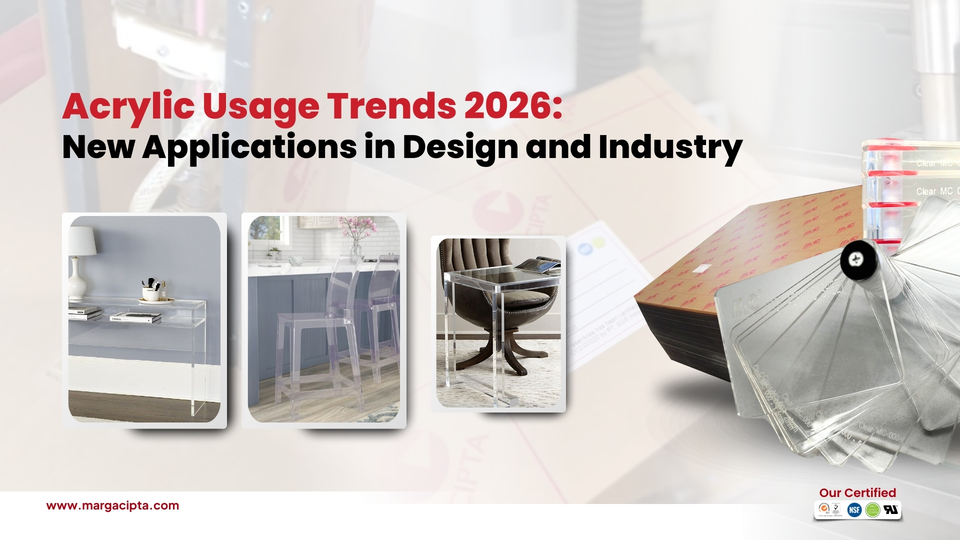
Acrylic Usage Trends 2026: New Applications in Design and Industry

Informational

Acrylic continues to gain momentum as one of the most versatile materials across design, construction, and manufacturing industries. Known for being lightweight, strong, highly transparent, and easy to fabricate, acrylic is increasingly replacing traditional materials such as glass and metal.

As we move into 2026, acrylic is no longer limited to signage or displays. Its applications are expanding rapidly, opening new opportunities for businesses, designers, architects, and manufacturers. Below are the key acrylic usage trends predicted to shape design and industry in 2026.

Trend 1: Acrylic Interior Panels

One of the strongest acrylic usage trends in 2026 is the rise of acrylic interior panels for both commercial and residential buildings.

Why this trend is growing:

The rapid development of offices, retail spaces, hotels, and modern housing has increased demand for materials that are visually appealing, durable, and cost-efficient. Acrylic interior panels offer high clarity and a sleek, minimalistic look, making them ideal for partitions, wall panels, and decorative elements.

Compared to glass, acrylic is more affordable, lighter, and easier to install. Designers and architects also favor acrylic for its flexibility in color, thickness, and finish, allowing them to create modern interior concepts without compromising safety or aesthetics.

Read also: 100% Virgin MMA: The Key to High-Quality Acrylic Sheets

Trend 2: LED Signage and Display Systems

LED signage remains one of the most dominant acrylic applications heading into 2026.

Why this trend continues to rise:

Offline retail transformation is still strong, particularly in developing markets where physical stores continue to evolve. Many small and medium-sized businesses are renovating storefronts and upgrading visual branding, increasing demand for LED signage and display systems.

Acrylic is the preferred material for LED signage due to its excellent light transmission, smooth surface, and ability to diffuse light evenly. From illuminated logos and lightboxes to promotional displays, acrylic helps businesses create brighter, more attractive visual communication.

Trend 3: Acrylic Greenhouse Panels

Sustainability and food security are driving the growth of urban farming, hydroponics, and smart agriculture—making acrylic greenhouse panels a key trend in 2026.

Why this trend is emerging:

Acrylic offers superior UV resistance, high transparency, and better impact strength compared to glass. These properties make it ideal for greenhouse roofs and walls, where consistent light transmission and durability are essential.

As urban farming expands into rooftops, compact land areas, and controlled environments, acrylic greenhouse panels provide a long-lasting, lightweight solution that supports plant growth while reducing maintenance costs.

Read also: Food Grade Acrylic: Safe Choice for Your F&B Business

Trend 4: Furniture, Home Décor, and Small Products

Acrylic furniture and decorative items are gaining popularity, influenced heavily by social media-driven interior trends.

Why this trend is accelerating:

Clean, modern, and minimalist interiors are in high demand, and acrylic fits perfectly into this aesthetic. Furniture such as acrylic chairs, tables, shelves, and decorative panels offers a contemporary look without making spaces feel heavy.

In addition, e-commerce sellers increasingly use acrylic for DIY products and small household items. Consumers prefer materials that are lightweight, modern, durable, and visually appealing—qualities that acrylic delivers consistently.

Acrylic: A Material with Expanding Relevance

The versatility of acrylic makes it increasingly relevant across industries beyond traditional applications. From architecture and retail to agriculture and lifestyle products, acrylic continues to adapt to changing market needs.

To support these growing demands, choosing a high-quality material is essential. MC® Cast Acrylic Sheet is a proven solution, offering consistent clarity, strength, and fabrication performance for both design and industrial applications.

Conclusion

Acrylic usage trends in 2026 highlight a clear shift toward materials that combine aesthetics, durability, and flexibility. Interior panels, LED signage, greenhouse systems, and furniture are just a few examples of how acrylic is shaping the future of design and industry.

By leveraging reliable materials like MC® Cast Acrylic Sheet, businesses can stay ahead of trends and unlock new opportunities in an evolving market.

News Release

Acrylic Sheet Thickness Guide: How to Choose the Right One

When working with acrylic sheets for your project, whether it's for signage, display units, or protective panels, choosing the right acrylic sheet thickness is just as important as selecting the right color or finish. 

Thickness affects not only the durability and appearance of your acrylic but also how it performs under pressure or load.

In this guide, we’ll walk you through different acrylic sheet thickness options and the types of projects they’re best suited for.

Why Acrylic Sheet Thickness Matters

The thickness of an acrylic sheet determines its strength, rigidity, and suitability for specific uses. 

A sheet that is too thin might bend or crack under stress, while one that’s too thick could be unnecessarily heavy and more costly. 

By understanding how each thickness performs, you can make a more informed decision that balances durability, appearance, and budget.

Read also: Choose the Right Cast Acrylic Color for Your Project

1. Thin Acrylic Sheets (1.5mm–3mm): Lightweight and Flexible

These thin sheets are commonly used for light-duty applications such as brochure holders, menu covers, small signage, DIY crafts, and protective face shields. 

They’re easy to cut and shape, making them ideal for creative and decorative projects that don’t require heavy impact resistance.

However, due to their flexibility, they are not recommended for structures that need to support weight or endure constant handling.

2. Medium Thickness (4.5mm–6mm): Versatile and Sturdy

Acrylic sheets in the mid-range thickness offer a perfect balance between flexibility and strength. This makes them suitable for a wide range of uses, including display cases, retail fixtures, and architectural panels. 

They provide good visual clarity and resistance to breakage, while still being lightweight enough for wall-mounted or suspended designs.

These are often used in interior partitions, desk dividers, or lightboxes, especially when durability and a polished appearance are both priorities.

3. Thick Acrylic Sheets (8mm–12mm): Durable and Impact-Resistant

For applications that require greater structural strength, such as aquarium panels, furniture, shelving, or heavy-duty display stands, thicker acrylic sheets in the 8mm to 12mm range are a solid choice. 

These sheets can withstand more weight and pressure, offering high impact resistance and rigidity.

Thicker sheets also provide better sound insulation and can be used in environments where both functionality and safety are essential.

Read also: Benefits of Using Clear Cast Acrylic Sheet

4. Extra Thick Acrylic (15mm and above): Structural and Architectural Uses

At 15mm or thicker, acrylic sheets are often chosen for architectural glazing, outdoor signage, large installations, and furniture with load-bearing needs. 

These sheets are highly rigid and can serve as structural components or even as an alternative to glass in many applications.

They’re often used in museums, commercial buildings, and high-end retail designs where aesthetics and strength go hand in hand.

How to Choose the Right Thickness for Your Project

To select the right acrylic sheet thickness, here are some things to consider:

  • Weight or pressure the sheet needs to support
  • Installation method (e.g., freestanding, wall-mounted, framed)
  • Environmental exposure (e.g., indoor vs. outdoor)
  • Aesthetic requirements (how polished or sleek it should appear)
  • Budget considerations

If you’re working with lighting, remember that thinner sheets may allow better light transmission, while thicker sheets can give a more diffused and solid look.

Understanding acrylic sheet thickness is crucial for ensuring that your design looks great and performs as expected. 

From delicate crafts to structural installations, choosing the right thickness enhances both the function and lifespan of your acrylic piece.

At Margacipta Wirasentosa, we offer a wide range of acrylic sheet thicknesses tailored for every kind of project.

Need help finding the right acrylic sheet thickness? Contact our team or visit our Instagram for recommendations and high-quality cast acrylic sheets that match your vision.

FESPA Global Print Expo 2024

FESPA Global Print Expo returns to Amsterdam, The Netherlands next spring 2024 During 19-22 March, Europe’s leading print and signage exhibition attracts the worlds leaders in the industry to showcase their latest technology and developments. We look forward to welcoming you in Amsterdam, The Netherlands 19-22 March 2024! Visit our booth Hall 2 stand D26

Best Acrylic Thickness for Ornaments: Size Guide for Perfect Results

The best acrylic thickness for ornaments is typically between 2 mm and 3 mm.

This range provides the ideal balance between durability, lightweight structure, and ease of cutting.

Choosing the right thickness is crucial to ensure that ornaments are strong enough to hold their shape while still looking clean and refined.

Why Thickness Matters for Ornaments

Ornaments are often designed to be lightweight and decorative. Using the wrong thickness can affect both appearance and performance:

  • Too thin → may bend or break easily
  • Too thick → looks bulky and harder to cut

The right thickness ensures a professional finish without compromising functionality.

Read also: Colored Acrylic Sheet for Ornaments: Types, Colors, and Applications

Recommended Thickness Based on Use

Here’s a practical guide:

2 mm acrylic sheet

  • Best for small and lightweight ornaments
  • Ideal for hanging decorations and detailed designs

3 mm acrylic sheet

  • Suitable for slightly larger or layered ornaments
  • Provides better rigidity and durability

For most applications, these two thickness options cover the majority of design needs.

Factors to Consider When Choosing Thickness

1. Ornament Size

Larger ornaments require thicker acrylic to maintain shape and prevent bending.

2. Design Complexity

Intricate designs benefit from thinner sheets for easier cutting and finer detail.

3. Usage Type

If the ornament will be handled frequently or used long-term, slightly thicker acrylic offers better durability.

Fabrication Considerations

Acrylic sheets are widely used in fabrication processes such as:

  • Laser cutting
  • Engraving
  • UV printing

Using the correct thickness ensures clean edges, precise cuts, and minimal material waste.

Thinner sheets are easier to cut, while thicker sheets provide a more solid feel.

Why Acrylic is Ideal for Ornaments

Acrylic is a preferred material because it offers:

  • Smooth surface for clean finishing
  • High clarity and color options
  • Lightweight structure
  • Good durability for decorative use

These qualities make it suitable for both handmade and mass-produced ornaments.

Read also: Acrylic vs Glass for Plaque: Which Material is Better?

Importance of Material Quality

Even with the right thickness, material quality plays a key role.

High-quality acrylic sheets provide:

  • Consistent thickness
  • Better cutting performance
  • Reduced risk of cracking

For businesses, this ensures more efficient production and consistent output.

Marga Cipta offers high-quality acrylic sheets suitable for various ornament applications, supporting both small-scale and bulk production needs.

Conclusion

The best acrylic thickness for ornaments is generally between 2 mm and 3 mm, depending on size and design.

By choosing the right thickness and using high-quality acrylic sheets, you can achieve ornaments that are durable, lightweight, and visually appealing.

Ready to explore our cast acrylic options? At Margacipta Wirasentosa, we offer high-quality clear cast acrylic sheets from 100% virgin MMA in various thicknesses and custom sizes to fit your needs.

Reach to our Instagram or download our Product Catalog for more information.

Why Cast Acrylic Is Better Than Glass: Benefits You Should Know

When it comes to choosing materials for design, construction, or manufacturing projects, cast acrylic sheet stands out as one of the most reliable and versatile choices. 

MC® Cast Acrylic Sheet offers distinct advantages that make it a superior option compared to many alternatives on the market. 

From durability to performance, here are the key reasons why MC® Cast Acrylic Sheet is better than others.

1. Superior Clarity and Transparency

One of the biggest reasons designers and fabricators choose cast acrylic sheet is its glass-like transparency. MC® Cast Acrylic Sheet delivers exceptional optical clarity. 

Unlike cheaper alternatives that may appear cloudy or distort visuals, MC® Cast Acrylic maintains consistent clarity, making it ideal for displays, signage, windows, and architectural applications.

2. Excellent Strength and Durability

Compared to standard plastic sheets, cast acrylic sheet is known for its impact resistance and durability. 

MC® Cast Acrylic Sheet is stronger than glass while being much lighter in weight. It resists shattering, scratching, and weathering, ensuring long-lasting performance both indoors and outdoors. 

This makes it especially suitable for industries such as construction, medical equipment, and transportation.

Read also: Cast Acrylic vs Extruded, Which One Is Better?

3. Versatility in Fabrication

Fabricators often prefer MC® Cast Acrylic Sheet because it is easier to cut, bend, polish, and thermoform compared to other materials. 

Unlike extruded acrylic, which can have limitations during processing, cast acrylic sheet maintains stability under high heat and delivers smoother, cleaner edges when machined. This flexibility makes it perfect for custom projects and large-scale manufacturing.

4. Wide Range of Applications

MC® Cast Acrylic Sheet is not just strong and clear, it is also highly versatile in application. Commonly used for:

  • Point-of-sale displays and retail fixtures
  • Protective barriers and sneeze guards
  • Architectural glazing and skylights
  • Lighting diffusers and decorative panels
  • Medical and laboratory equipment

The adaptability of cast acrylic sheet ensures that businesses across multiple industries can benefit from its unique properties.

Read also: Do’s and Don’ts: Cleaning Acrylic Sheet the Right Way

5. Resistance to Weather and Chemicals

Unlike some plastics that yellow, warp, or become brittle over time, MC® Cast Acrylic Sheet offers excellent resistance to UV rays, weather conditions, and many chemicals. 

This makes it ideal for both indoor and outdoor use, ensuring long-term value and performance in demanding environments.

Choosing the right material can make or break a project. While there are many options available, MC® Cast Acrylic Sheet consistently proves to be a better choice than other alternatives. 

Its superior clarity, strength, durability, and versatility give it a competitive edge, making it the go-to material for industries that demand both performance and aesthetics.

If you are searching for a reliable cast acrylic sheet supplier, consider MC® Cast Acrylic Sheet for unmatched quality and long-lasting results.

PT Margacipta Wirasentosa produces high-quality acrylic using 100% virgin MMA, delivering consistent clarity, strength, and NSF-certified options (clear and white opal). 

Contact us to info@margacipta.com to get the right acrylic solution for your business.